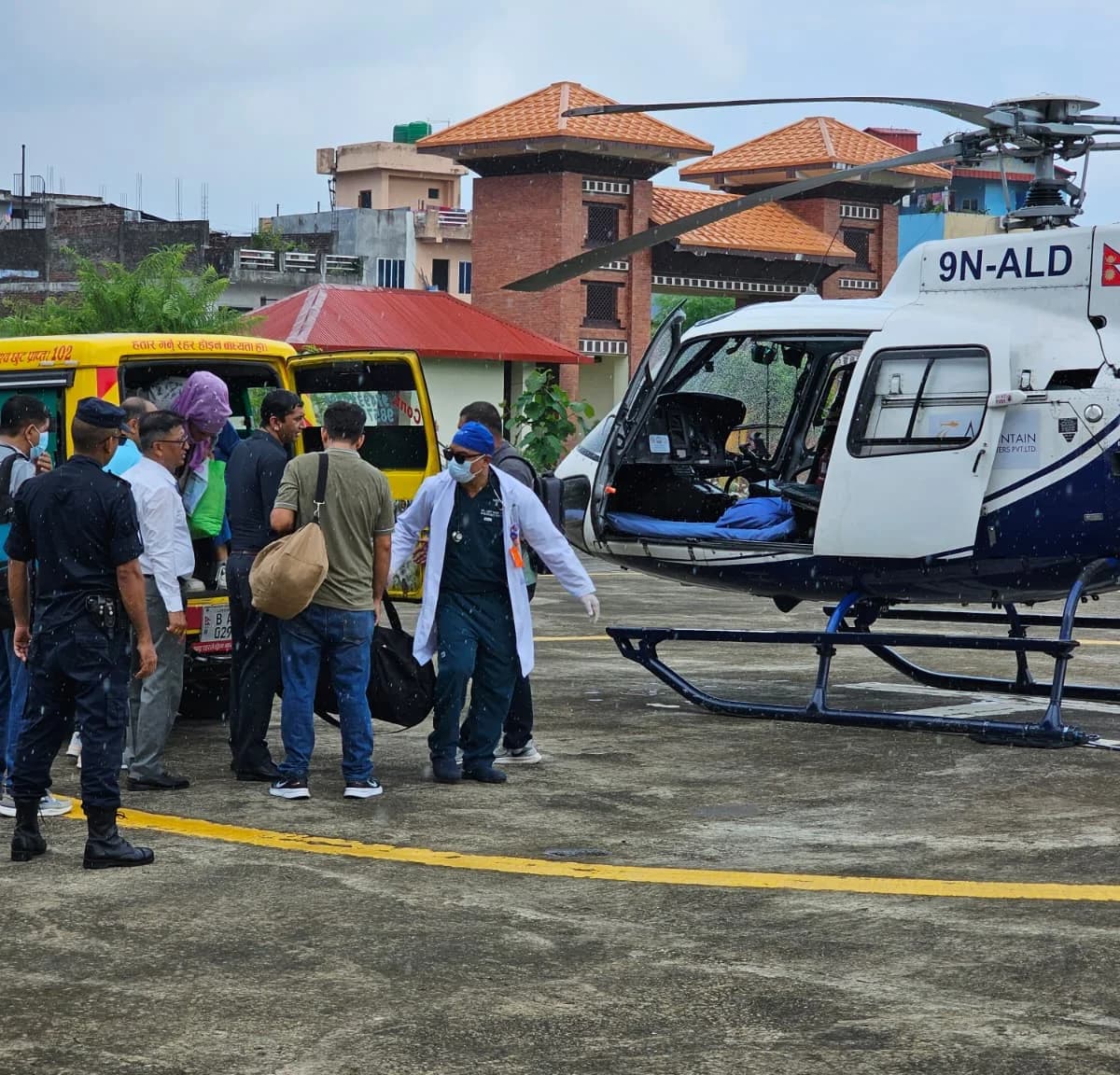
Air Ambulance
Air Ambulance Service in Nepal
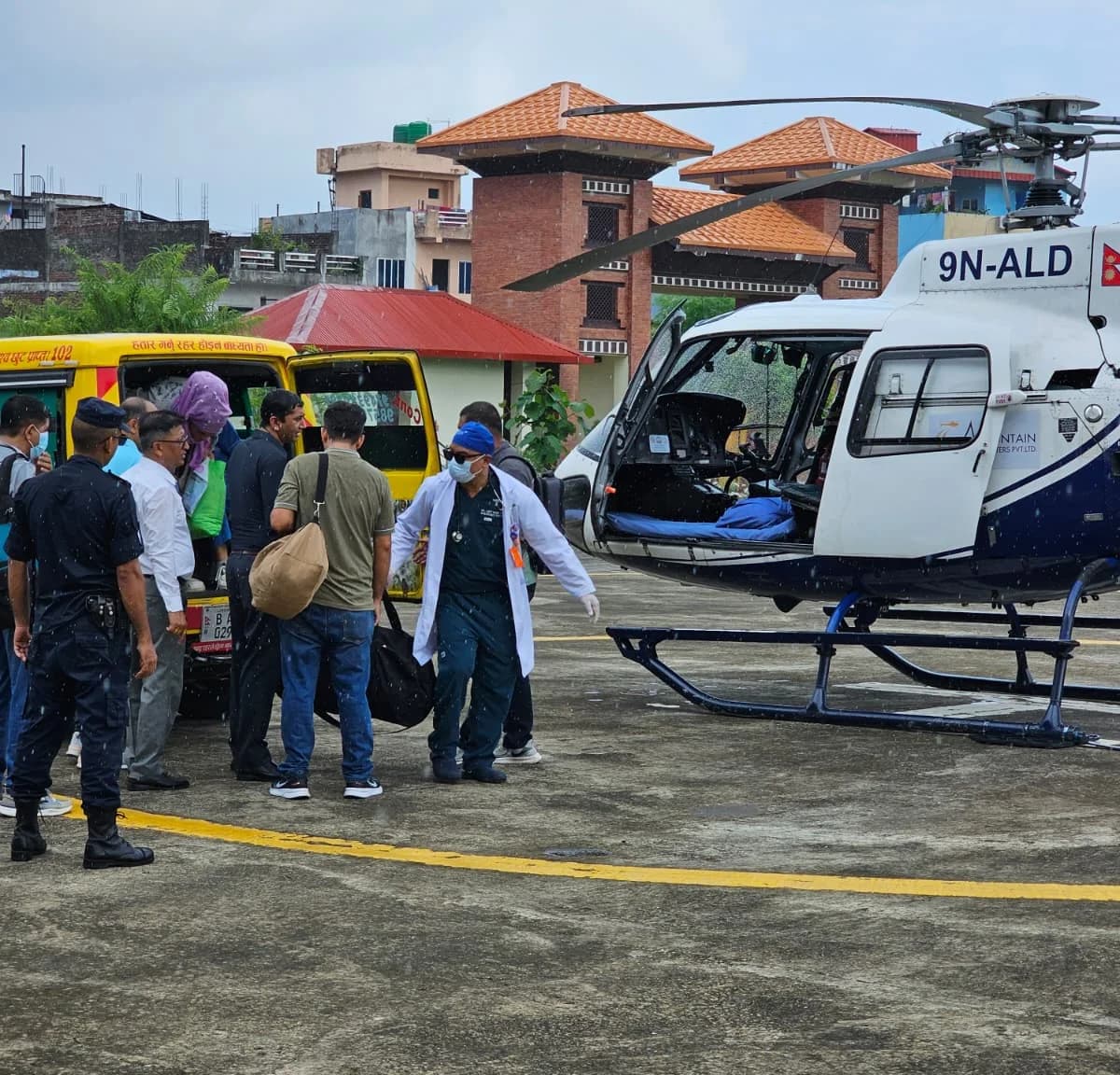
How Our Helicopter Rescue Process Works
Call Us for Helicopter
Our Hospital Partners





Documents You'll Need
Names & Valid ID

What Affects How Fast We Can Reach You
Whether there's a helipad at the location.
A helipad is the fastest scenario. Without one, we may need a long line and ground crew, which adds time.
Whether the helicopter can land at all or has to hover.
Some sites can't be landed on safely, which changes both the time and the technique.
Whether a medical team needs to come along.
If a team of doctors or ventilator support is needed on board, that's arranged before departure.
Weather along the route, both ways.
Wind and cloud cover are checked for the full round trip, not just the way in.
Aircraft & Payload
The time to reach the desire location is determined by the aircraft and payload
Questions
Everything You Need To Know
Helicopters are ideal for scene responses (trauma, remote locations), hospital-to-hospital transfers under 150–200 miles, and accessing facilities without runways. They offer faster launch times and point-to-point transport but have shorter range and lower cabin altitude capability than jets.
Each aircraft functions as a flying ICU: ventilators, multi-channel infusion pumps, cardiac monitors/defibrillators, blood products, advanced airway equipment, and specialized neonatal/pediatric gear. Crewed by critical care flight nurses and paramedics (physician available on request).
Wheels-up within 15–30 minutes of acceptance for scene calls; 30–60 minutes for interfacility transfers (weather, maintenance, and crew duty permitting). Our 24/7 dispatch coordinates simultaneously with sending/receiving facilities and ground EMS.
Cost varies by distance, aircraft type, and medical configuration. We verify benefits, obtain pre-authorization, and bill insurance directly. Most major insurers, Medicare, Medicaid, and workers' comp cover medically necessary air transport. Membership programs available for uncovered gaps.
Typically one companion (up to 250 lbs combined with patient/equipment) may ride in the cabin, space and clinical conditions permitting. Final determination made by the flight medical crew at dispatch.