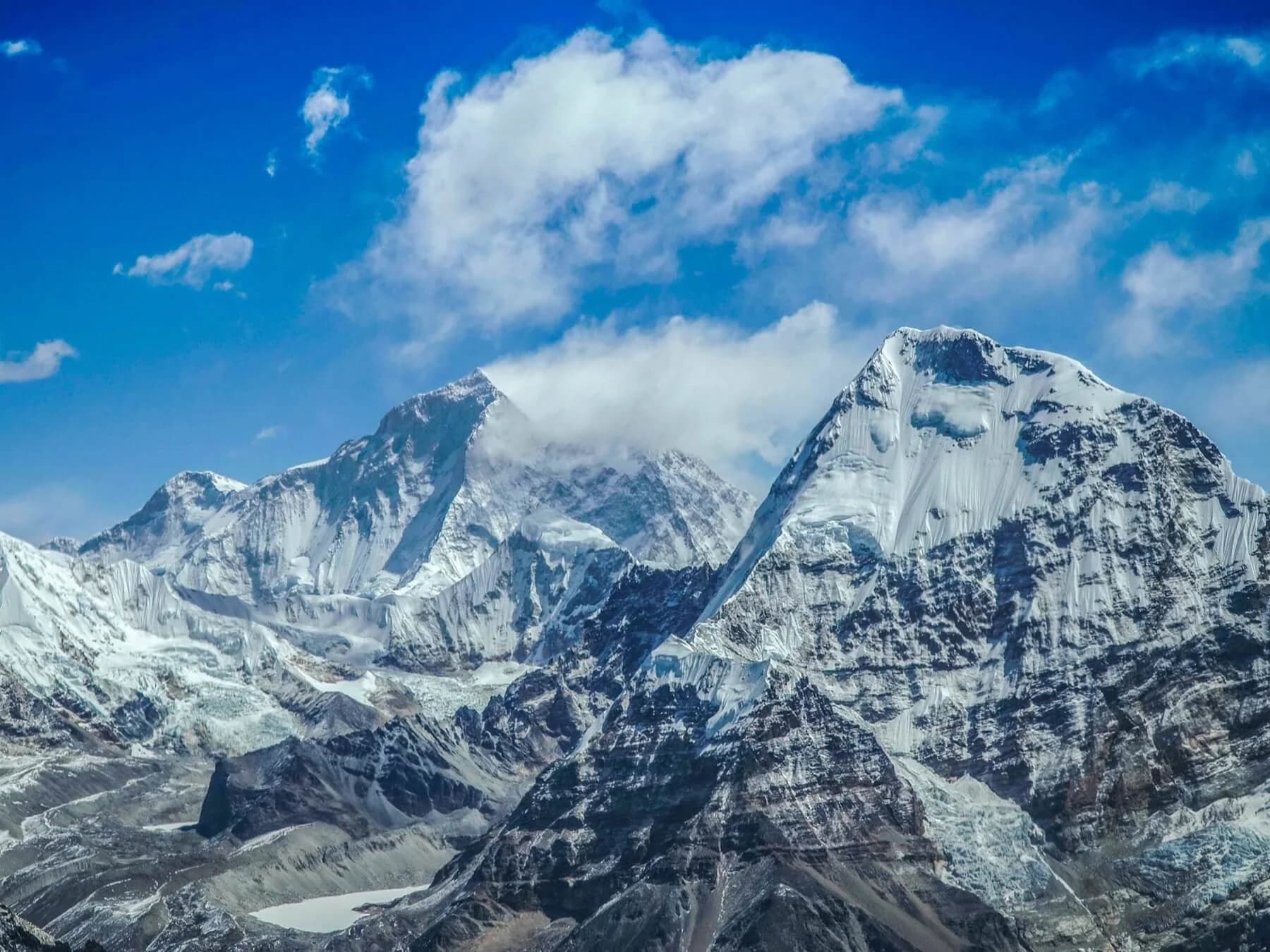
People ask us this before almost every helicopter tour in Nepal.
“What should I wear?”
It sounds like a small question until the morning of the flight arrives. Kathmandu is still half asleep. Pokhara feels calm beside the lake. The air is mild, sometimes even warm, and a light jacket feels like enough.
Then the helicopter lifts.
The city drops away. The hills begin to fold into one another. The air changes. Green turns into rock, rock turns into snow, and suddenly your body remembers that Nepal is not one climate. In less than an hour, you can go from a hotel lobby to the cold wind of Kala Patthar, from Pokhara’s warmth to the stone bowl of Annapurna, or from Kathmandu’s streets to the high, dry air of Muktinath.
That is why packing matters.
A helicopter tour in Nepal is not a normal sightseeing trip. It is fast, beautiful, and full of altitude change. You do not need expedition gear, but you do need the right clothing, shoes, medication, camera setup, and personal essentials.
This is the packing list we would give to anyone flying with us.
Dress for the Landing, Not the City
The biggest mistake passengers make is dressing for where the day begins.
Kathmandu and Pokhara can fool you. On a clear morning, they feel gentle. You look outside, see blue sky, and think the Himalaya will feel the same. It will not. The mountains have their own weather, their own temperature, and their own rules.
For Everest helicopter tours, Kala Patthar landings, Annapurna Base Camp flights, Muktinath helicopter trips, and other high-altitude helicopter tours in Nepal, your clothing should be warm, layered, comfortable, and practical.
A good setup is simple:
Comfortable inner layer or T-shirt
Fleece or light down mid-layer
Windproof outer jacket
Comfortable trousers
Warm socks
Closed shoes with good grip
The right outfit for a heli tour in Nepal is not about looking like a climber. It is about staying warm, moving safely, and enjoying the landing without fighting the cold.
The mountains forgive excitement. They do not forgive carelessness.
Everest Helicopter Tour Packing List
An Everest helicopter tour is one of the biggest altitude changes most travellers experience in a single morning.
You start low. You climb fast. You land high.
For an Everest Heli Tour with Kala Patthar landing and Hotel Everest View breakfast, dress warmer than you think you need. The cabin may feel comfortable, but once the door opens near the high Himalaya, the air can be thin, dry, and cold. Wind makes it feel colder, even when the sun is bright.
For Everest and Kala Patthar, we recommend:
Warm jacket or down jacket
Fleece or thermal layer
Trekking-style trousers
Gloves
Beanie or warm cap
Sunglasses
Sunscreen
Lip balm
Closed shoes with grip
When people ask, “Kala Patthar, what to wear?" this is the honest answer: dress for cold, wind, and altitude, even if you will only be outside for a short time.
Kala Patthar is not a fashion stop. It is one of the most dramatic viewpoints in the Himalaya. A few minutes there can be enough to feel the mountain.
Annapurna, Muktinath, and Other Helicopter Flights
An Annapurna helicopter packing list is similar to Everest, but the feeling is different.
From Pokhara, the flight begins softly. You see the lake, the terraces, the villages, and the green hills. Then the aircraft enters the great amphitheatre of Annapurna, where the mountains rise around you like a wall.
At Annapurna Base Camp, the morning air can be cold, the ground can be uneven, and the landing area can feel windy. A warm jacket, sunglasses, gloves, and closed shoes are still important.
For Muktinath helicopter flights, wind is often the bigger story. The landscape is dry, open, and powerful. Even when the day starts warm, a windproof jacket, sunglasses, warm layers, and proper shoes help you feel comfortable during the landing.
For short scenic helicopter flights from Pokhara or Kathmandu without a high-altitude landing, you can dress slightly lighter. But still avoid sandals, thin clothing, or anything that becomes uncomfortable in the wind.
The rule is simple: pack for the landing point, not the starting point.
Shoes Matter More Than Style
Many passengers think footwear does not matter on a Nepal helicopter tour because there is no long trek.
That is not completely true.
You may only walk a few steps, but those steps may be on gravel, snow, ice, dust, stone, or uneven ground. Rotor wash can move loose items quickly, and mountain landing sites are not always smooth.
Wear closed shoes with grip.
Trekking shoes are ideal. Good trainers are usually fine for simple tours. Avoid sandals, heels, slippers, open shoes, and loose footwear. They are not practical around a helicopter, and they are not suitable for cold high-altitude landings.
The best shoes are the ones that help you stand safely, walk comfortably, and keep your feet warm.
Altitude Essentials for Helicopter Tour Nepal
For most passengers, a helicopter tour is short enough that serious mountaineering equipment is not required. But altitude still deserves respect.
At high landing points, some people feel completely fine. Some feel light-headed. Some feel slightly breathless. Some get excited and move too fast for photos. That is when simple preparation matters.
For high-altitude helicopter flights, carry:
Warm jacket
Sunglasses
Gloves
Water bottle
Lip balm
Personal medication
Small snack if needed
Any altitude medicine only if prescribed or advised by your doctor
Do not run at high altitude. Do not jump around for photos. Do not walk far from the landing area unless the crew allows it. At Kala Patthar, Everest View, Annapurna Base Camp, or any high landing site, move slowly, breathe normally, and listen to the crew.
The mountain is not going anywhere. You do not need to rush to see it.
Medication and Health Preparation
This is the part many travellers leave until the last moment.
If you take regular medication, carry it with you in your small bag or jacket pocket. Do not keep important medicine in luggage that may not come into the cabin.
For medication and health preparation, carry:
Regular prescribed medicine
Motion sickness medicine if needed
Headache medicine you normally use
Inhaler if you use one
Small personal first-aid items
Altitude-related medicine only after medical advice
If you have any heart, lung, blood pressure, pregnancy-related, recent surgery, or other serious medical condition, it is important to mention it before the flight. This helps ensure the journey is planned with your safety and comfort in mind.
A helicopter makes the Himalaya accessible, but it does not remove altitude from the equation.
Camera Gear for Helicopter Tour Nepal
Everyone brings a camera. Some bring two. Some bring a phone and then wish they had charged it properly.
The best camera setup for a helicopter tour in Nepal is simple, secure, and easy to handle. Inside the helicopter, space is limited. At landing points, wind can be strong. You do not want loose camera straps, open bags, or equipment scattered around.
Small cameras, phones, and power banks are usually fine to carry, but they should be kept securely in a small personal bag.
Carry:
Phone with full battery
Small camera with charged battery
Extra memory card
Small lens cloth
Small power bank
Secure camera strap
Avoid large camera bags, tripods, loose accessories, heavy equipment, or drones unless permission has been arranged in advance. Drone rules in Nepal are strict, especially near airports, national parks, restricted areas, and sensitive mountain zones. A helicopter tour is already an aerial experience. You do not need a drone to see the sky.
Take the photo, then lower the camera. Some passengers return with hundreds of pictures and realise they forgot to truly look.
What Not to Carry
Packing well is also knowing what to leave behind.
Do not bring large bags, hard suitcases, sharp objects, heavy equipment, loose scarves, or unnecessary items. Avoid big handbags and anything that slows boarding.
Helicopter flights are weight-sensitive, especially in the mountains. Passenger weight, baggage weight, fuel, altitude, temperature, and landing location all matter. Every extra kilogram becomes part of flight planning.
This is not airline travel. A helicopter is precise, and mountain flying is even more precise.
For most Nepal helicopter flights, one small personal bag is enough.
Simple Helicopter Tour Nepal Packing List
For Everest, Kala Patthar, Annapurna, Muktinath, and high-altitude helicopter tours, pack:
Warm jacket or down jacket
Fleece or thermal layer
Comfortable trousers
Closed shoes with good grip
Warm socks
Gloves
Beanie or warm cap
Sunglasses
Sunscreen
Lip balm
Water bottle
Personal medication
Phone or camera
Power bank
Passport or ID if required
Small personal bag
For short scenic flights, you may not need every winter item, but closed shoes, sunglasses, a jacket, and personal essentials are still recommended.
The One Thing People Forget
People remember the jacket. They remember the camera. They remember the sunglasses.
What they often forget is patience.
A mountain helicopter flight in Nepal operates on mountain time. Weather can change quickly, clouds can move across the valley, and wind can rise without warning. If a flight is delayed, it is not because the crew is careless. It is because the crew is careful.
In the Himalaya, safety is not a line in a brochure. It is the decision to wait when everyone is excited. It is the discipline to reduce weight when altitude demands it. It is the pilot looking at a valley and knowing whether the sky has room to fly.
Your packing helps. Your clothing helps. Your gear helps. But your patience helps too.
The Morning You Will Remember
The best helicopter tours begin before the city is fully awake.
You leave with a small bag, a warm jacket, and the strange excitement of not knowing exactly how the morning will change you. At the helipad, the aircraft waits with its blades still. The crew checks names, weights, weather, route, and timing. The machine starts. The air begins to move.
Then Kathmandu or Pokhara drops below you.
The question of what to wear suddenly feels answered. You are warm enough. Your shoes grip the ground. Your camera is ready. Your sunglasses cut the mountain light.
And when the helicopter lands, and the cold Himalayan air touches your face, you understand why preparation matters.
Because the right packing does not make the tour beautiful.
The mountains do that.
The right packing simply lets you stand there comfortably enough to receive it.
Mountain Helicopters Nepal — Everest helicopter tours, Annapurna helicopter flights, Muktinath helicopter trips, pilgrimage flights, scenic helicopter tours, private charters, rescue flights, and air ambulance support across Nepal.
Book your seat: +977 9801062087 | mountainhelicoptersnepal.com/book
Morning departures are recommended. The sharpest light, the calmest winds, and the clearest skies are usually before noon.
