Safety
Experienced High-Altitude Pilots
Mountain Helicopters Nepal
Reach the roof of the world in hours, not days.
Experienced High-Altitude Pilots
40 to 50 minutes
5,545 metres
Spring (March - May), Autumn (September - November)
4 or 5 passengers
400 kg (passenger weight + baggage weight per helicopter)
About This Flight
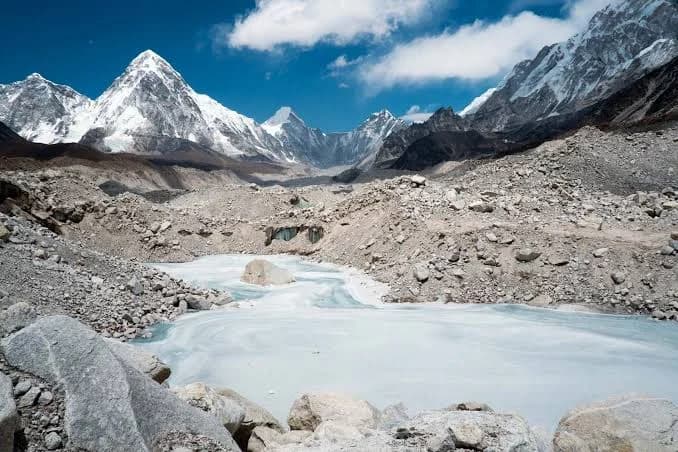
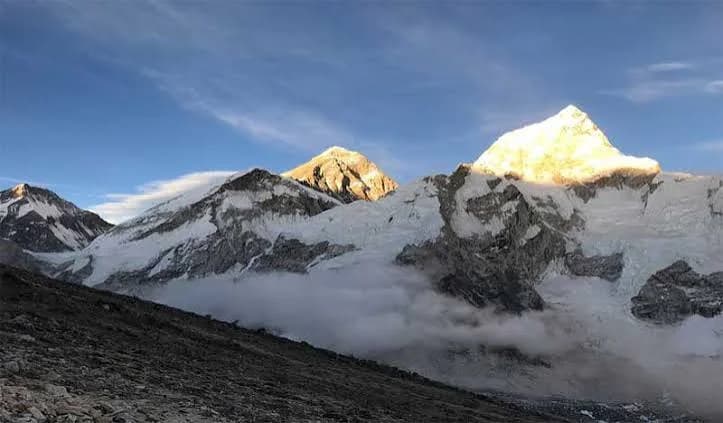
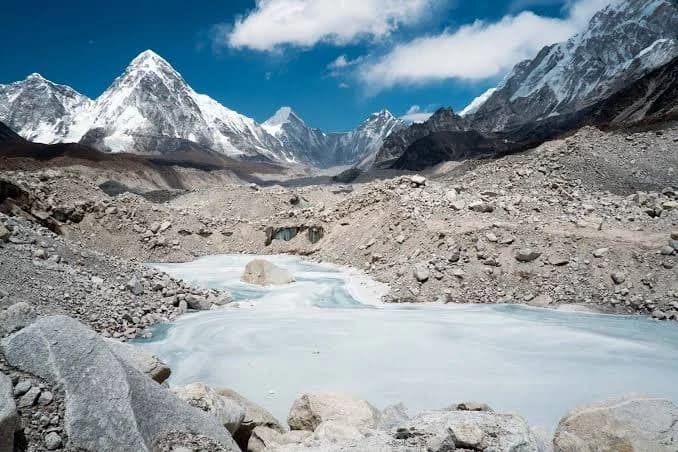
The Everest Base Camp Helicopter Tour is not just a flight; it is an unforgettable opportunity to be in the presence of the world's highest mountain. The journey begins as the helicopter lifts off from Tribhuvan International Airport in Kathmandu and heads northeast toward the Khumbu region, unveiling spectacular aerial views of Nepal’s Himalayan landscapes. As the flight progresses, passengers can admire the magnificent Khumbu Glacier, the dramatic peaks of Lhotse, and the majestic Mt. Everest (8,848.86 m) from above.
The highlight of the journey is the landing at Everest Base Camp (5,364 m), where travelers have the rare opportunity to step out of the helicopter and experience the legendary Everest region up close. Surrounded by towering Himalayan peaks and the rugged landscapes of the Khumbu, the landing provides a memorable perspective of the mountain environment that trekkers spend days reaching on foot. The Everest Base Camp Helicopter Tour with landing is an ideal choice for travelers who cannot undertake a long trek but still want to experience the thrill of standing at the foot of Mt. Everest and witnessing its extraordinary Himalayan surroundings.
The Route
Elevation profile: Kathmandu (1,400 m) to Kala Patthar (5,545 m) and back, plotted against elapsed time.
Tour Feels Like
The moment the Khumbu Valley opens, just forty-five minutes after departing Kathmandu, the helicopter leaves the city behind and enters the dramatic Dudh Kosi River gorge. Flying past the famous Lukla, the helicopter follows the ancient trekking route into the heart of the Everest region, a path trekkers usually take over a week to complete. Then the landscape dramatically shifts.
Mount Everest, Lhotse, Nuptse, and Ama Dablam surround the helicopter in a breathtaking 360-degree amphitheater of rock, snow, and ice. Rather than viewing the Himalayas from a distance, passengers fly directly over the massive Khumbu Glacier, the treacherous Khumbu Icefall, and the colorful expedition tents of Everest Base Camp. The helicopter lands at Pheriche at an altitude of 4,240 meters. From Pheriche, the helicopter takes passengers in groups to Everest Base Camp, where each group lands for a few minutes on the ground to step out, take photographs, and experience the raw scale of the world's highest mountain base. Once all shuttles are complete, the group reunites at Pheriche for a combined flight back to Kathmandu.
The return flight offers a relaxing journey back over the Khumbu Valley to Kathmandu. Within a single day, passengers can stand at the foot of the world's highest mountain and return to their hotel.
Who should choose
Know Your Destination
Share your preferred travel date, the number of passengers, exact passenger weights, and baggage details with Mountain Helicopters Nepal. Our operations team will verify helicopter availability, weather conditions, airport status, and total payload to ensure the flight can be operated safely. Once everything is confirmed, you will receive your final itinerary, reporting time, meeting point, and baggage allowance, so you can prepare for a smooth and hassle-free journey.
There at the airport, our ground team will have already processed your permit documentation the previous day, and at the helipad you will undergo weight checking of luggage and passengers. If the total weight exceeds the allowed limit, some baggage will need to be stored or sent on the next helicopter flight, and an extra charge will apply.
The helicopter will lift off from Kathmandu, heading northeast, and you will immediately see an open view of the Kathmandu Valley, the city, temples, etc. Within 10 minutes, you will have a view of the Himalayan foothills and the first line of the middle hills. Our pilot provides live commentary, identifying landmarks and peaks as they come into view.
The helicopter makes a refueling stop at Lukla airport before continuing deeper into the Khumbu. Lukla is famous for its extremely short runway (527 meters). It is a one-end uphill design on a mountain cliff at the far end. While refueling you can step out shortly and observe the airport, which serves as a trekking gateway for all Everest expeditions. The stop takes approximately 15-20 minutes before the helicopter continues northeast towards Everest Base Camp.
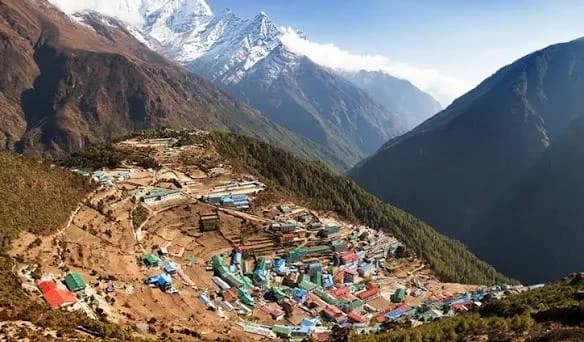
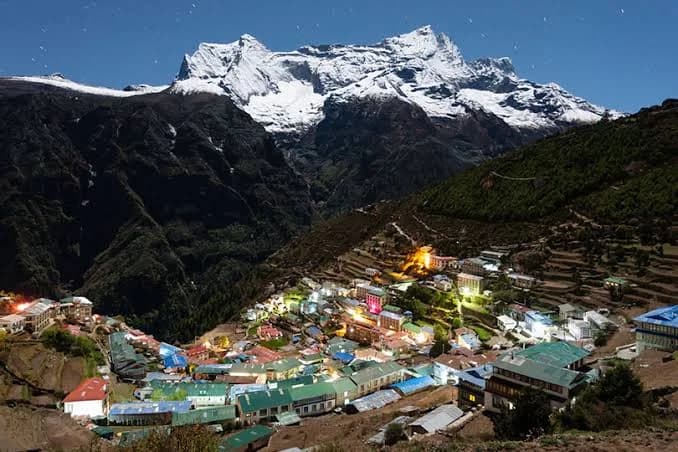
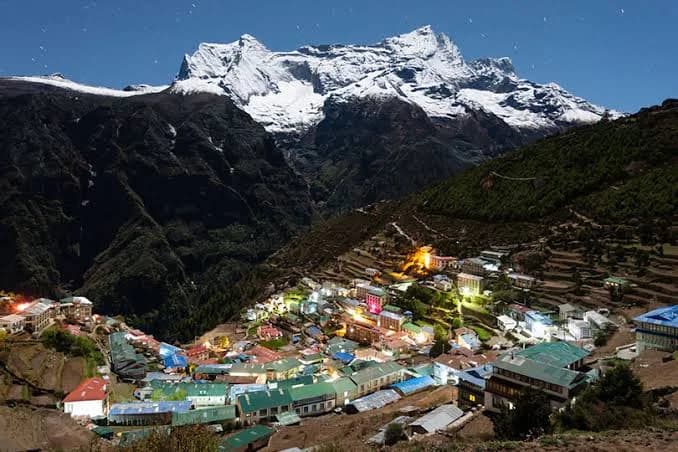
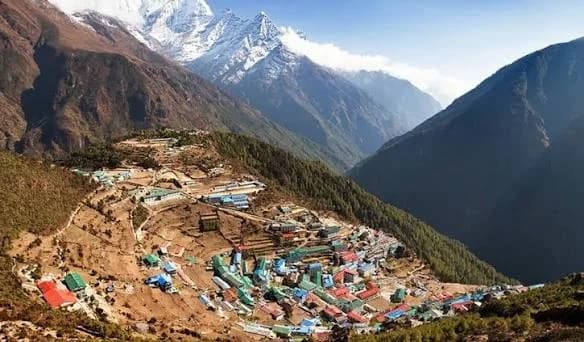
Namche Bazaar is the vibrant gateway to the Everest region, dramatically built into a natural amphitheater on the mountainside. From the air, its distinctive horseshoe-shaped settlement stands out against the rugged Himalayan landscape, with colorful buildings and terraced slopes spreading across the valley. Known as the commercial and cultural heart of the Khumbu, Namche has long been a meeting point for trekkers, climbers, Sherpa communities, and traders heading deeper into the mountains.
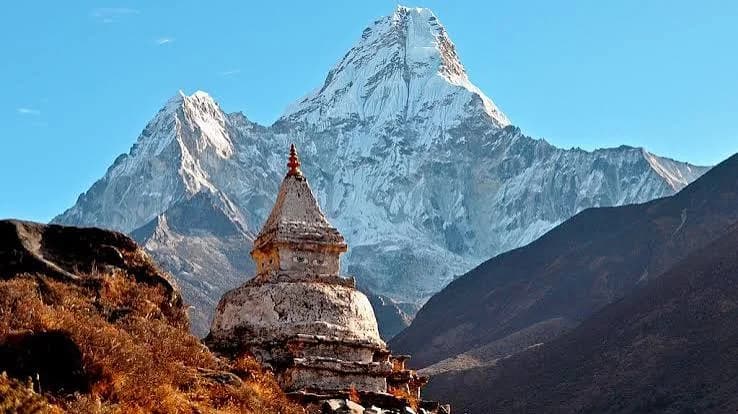
A most holy site for the Buddhists in the region, located on the edge of a steep cliff ridge in between Imja and Dudh Kosi valley. It is the most famous Buddhist monastery in the Khumbu region. This monastery was built in 1916 and was destroyed by the 1934 earthquake, it was rebuilt but again burned in a fire in 1989 and then restored again in 1993. On clear autumn days, the sound of monks praying echoes in the valley.
The helicopter carries passengers in small groups toward Everest Base Camp (5,364m), flying over the dramatic Khumbu Glacier and Khumbu Icefall. The helicopter makes a brief landing at the base camp, giving passengers the opportunity to step out, take photographs, and experience the extraordinary landscape surrounding the world's highest mountain. From the ground, passengers can see the vast glacier, towering ice formations, and, depending on the season, expedition tents and climbing activity around the base camp. After a few minutes at the landing site, the helicopter returns to Pheriche to collect the remaining passengers. Once everyone has completed the EBC landing, the entire group reunites at Pheriche and boards the helicopter together for the return flight to Kathmandu.
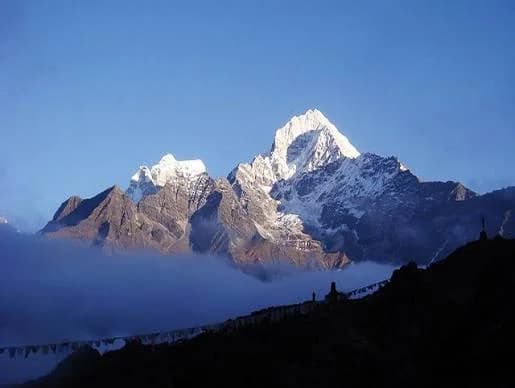
The Heli route back down through the Khumbu Valley, past Tengboche, across Namche, over the Dudh Koshi gorge, with a possible fuel stop in Lukla, and then south over the foothills back to Kathmandu. This is a short 45- 55-minute flight. We pick you up from the helipad and drop you off right at the domestic terminal.
In Pictures
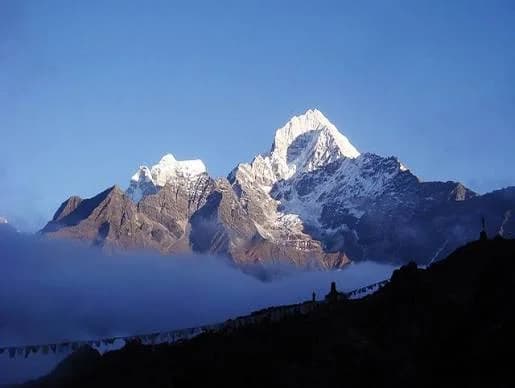
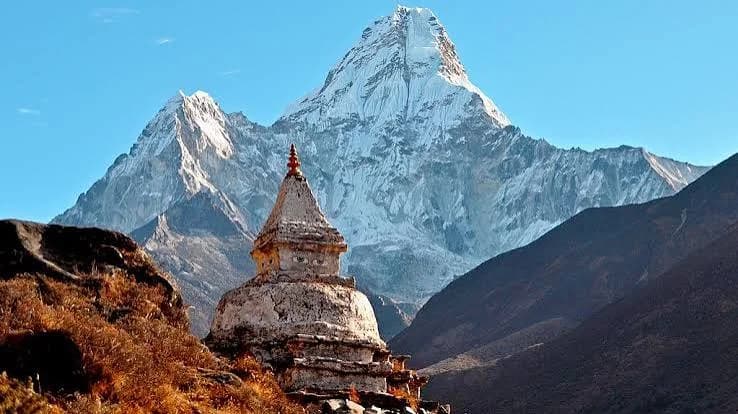
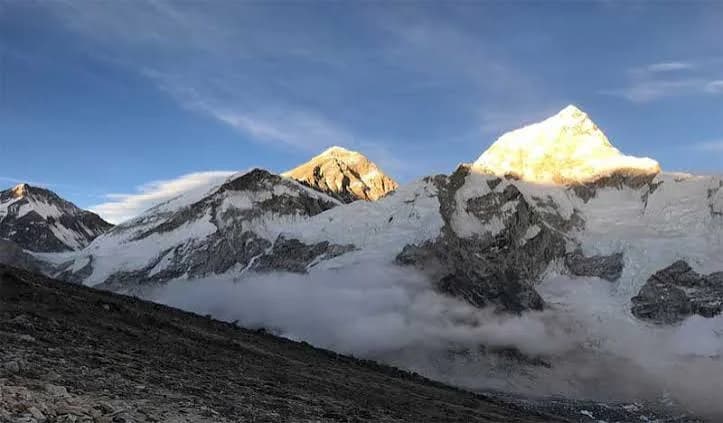
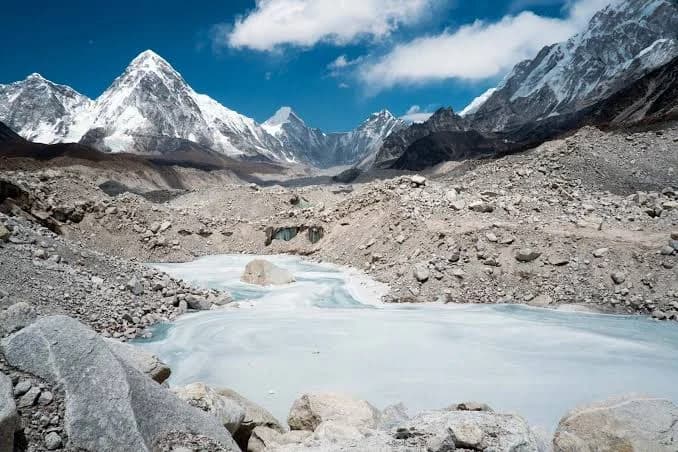
The airport tax is payable at the airport before departure. National park and local permit fees are paid either upon arrival in the Everest region or before takeoff, depending on the flight's operating arrangements and the crew's instructions.
| Countries | Airport Tax of Kathmandu | National Park Fees | Airport Tax of Lukla | Total |
|---|---|---|---|---|
| SAARC | 500 | 3500 | 500 | 4500 |
| Other Foreign Countries | 500 | 6000 | 500 | 7000 |
| Nepal | 500 | 100 | 500 | 1100 |
Fares & Cost
Shared by the seat, or the cabin to yourselves. Both fly to the same standard.
Semi-Private & Per-Seat Booking
Private & VIP Booking
Starting fares only, subject to change. Final price confirmed at booking.
Best Season
Months
March-May
Completion
92%
Visibility
Excellent
Months
September-November
Completion
95%
Visibility
Excellent
Months
December-February
Completion
68%
Visibility
Medium
Months
June-August
Completion
34%
Visibility
Low
Health, Safety & Altitude Guidelines
At Pheriche (4,240 m) and during the Everest Base Camp landing (5,364 m), the atmospheric pressure is significantly lower than at sea level. This means that with every breath, your body receives less oxygen than it normally would. While this can make you feel short of breath, lightheaded, or cause your heart to beat a little faster, these are normal responses to the sudden increase in altitude. Because your time at high altitude is limited and the helicopter descends promptly, most healthy passengers experience only mild, temporary effects before descending to lower elevations.
Consult the doctor for any of these if you:
Why Mountain Helicopters Nepal?
Questions
Still have questions? Our team is available 7 days a week.
ASK US DIRECTLY→Temperature ranges between 15 degrees Celsius and -5 degrees in spring and autumn, and below -17 degrees Celsius in winter.
As Everest Base Camp is a part of the Khumbu Glacier, which is an unstable terrain, there is no space for landing a helicopter.
The highest a helicopter has reliably landed for routine operation and rescue mission on Mt. Everest is at Camp 2 (approx 6400 meters).
There is no age limit for the Everest Base Camp helicopter tour in Nepal; anyone can join. If there is any emergency or our guest feels uneasy, we will immediately fly back to Kathmandu.
EBC is considered better because you get to see the world's highest peak and experience massive-altitude glaciers.
Let our experienced team create your unforgettable Himalayan journey.