Safety
Experienced High-Altitude Pilots
Mountain Helicopters Nepal
Stand face-to-face with Mount Everest.
Experienced High-Altitude Pilots
4 to 5 hours
5,545 metres / 18,192 feet
Spring (March - May), Autumn (September - November)
4 or 5 passengers
400 kg (passenger weight + baggage weight per helicopter)
About This Flight
The Everest Mountain Overfly with Kalapatthar Landing is the fastest way to stand at the foot of the world's highest mountain without spending two weeks on the trail. In a single day, the flight carries passengers from Kathmandu to Lukla, the gateway of the Khumbu, and onward to Pheriche at around 4,240 metres — a small stone village at the end of the valley and the last place the journey can be done on foot.
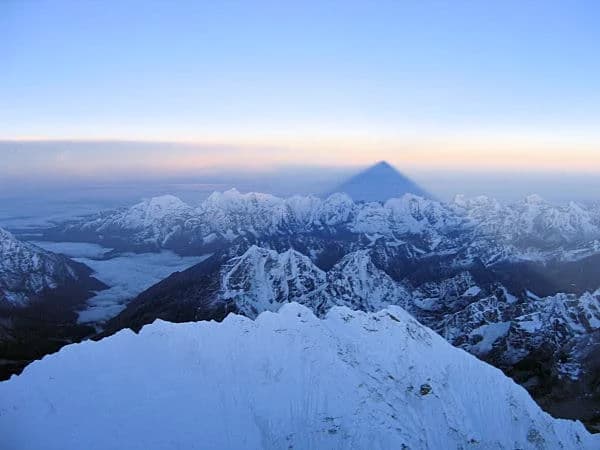
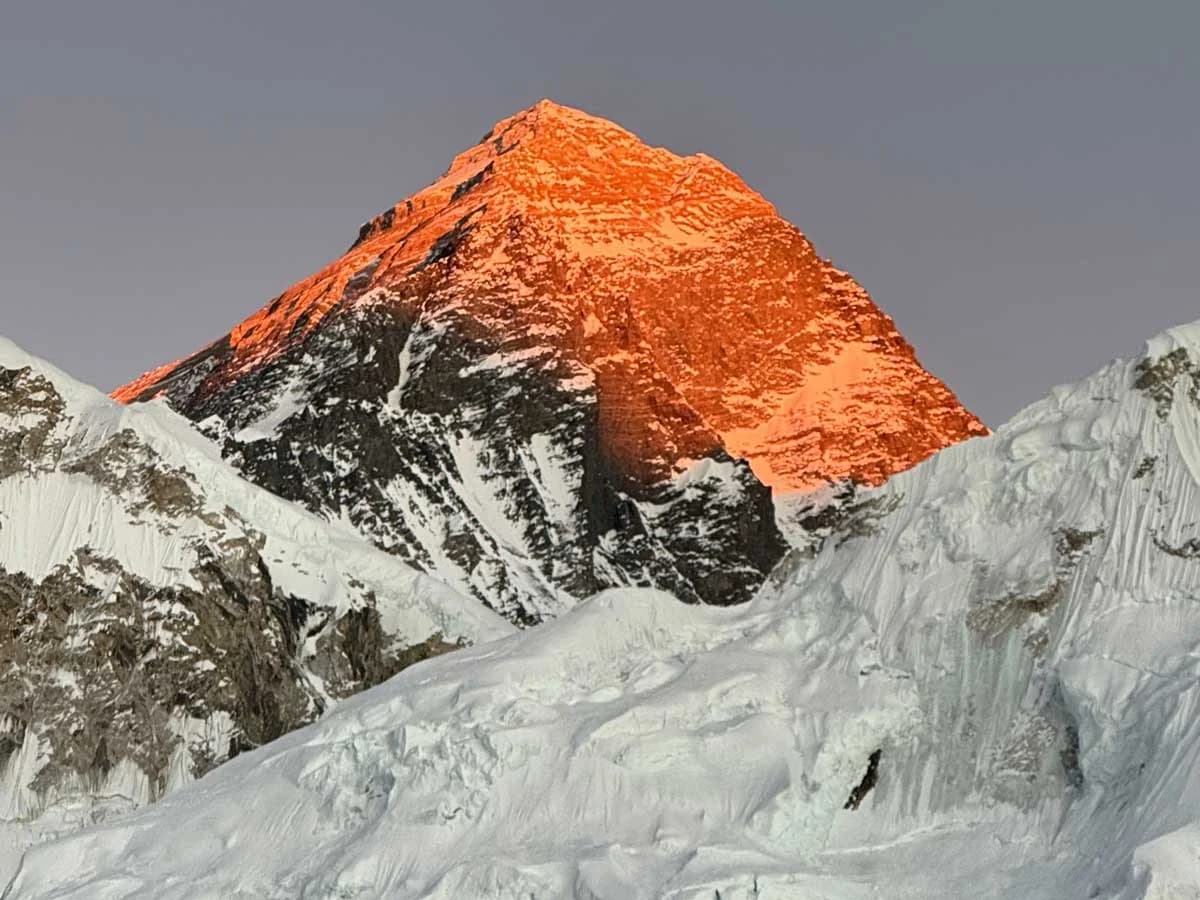
From here the flight takes on its final and most memorable shape. The aircraft lifts in the calm dark before dawn, climbing above 5,000 metres as Everest's southwest face rises close enough to fill the window: ice flutes, avalanche scars, and the Khumbu icefall spilling away in the valley far below. On the ground at Kalapatthar, the summit ridge sits a few kilometres off at 8,849 metres, prayer flags snap hard in the wind, and the valley drops away in every direction. Because the thin air up there allows only a light load, the group travels up in small numbers across the quiet early morning, so the full party is given the viewpoint unhurried rather than in a single rush.
By mid-morning the aircraft turns back down the valley and returns everyone safely to lower altitude, carrying with it the particular silence that only exists at 5,545 metres.

Tour Feels Like
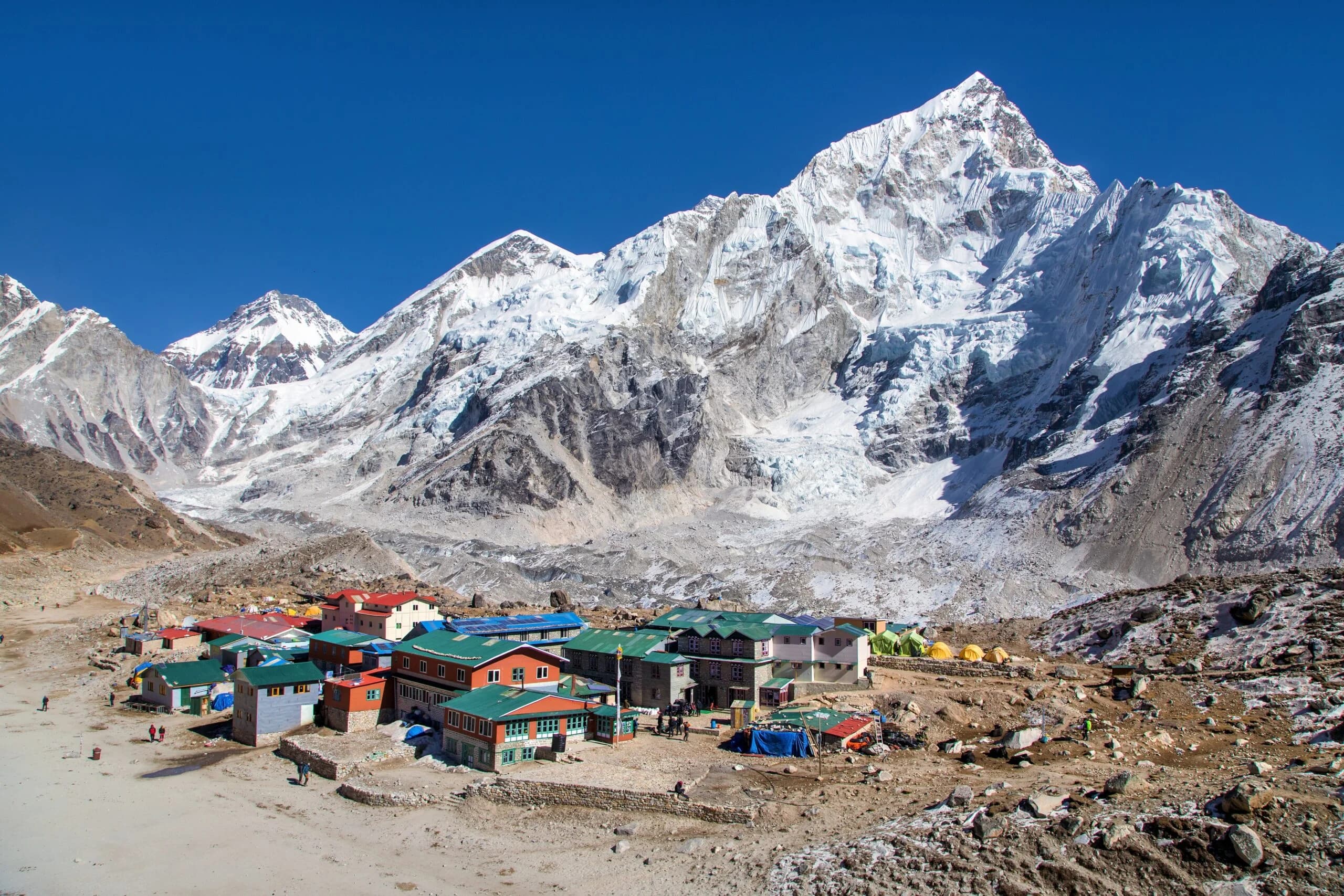
The tour opens gently, with a scenic hop from Kathmandu to Lukla that already sweeps over Nepal's mid-hills and river valleys. After a short refuelling stop, the flight turns deeper into the mountains, passing Namche Bazaar and Tengboche before the terrain flattens and opens into the wide, high-altitude Khumbu Valley, and Pheriche, a small stone village at 4,240 metres that most visitors only ever pass through.
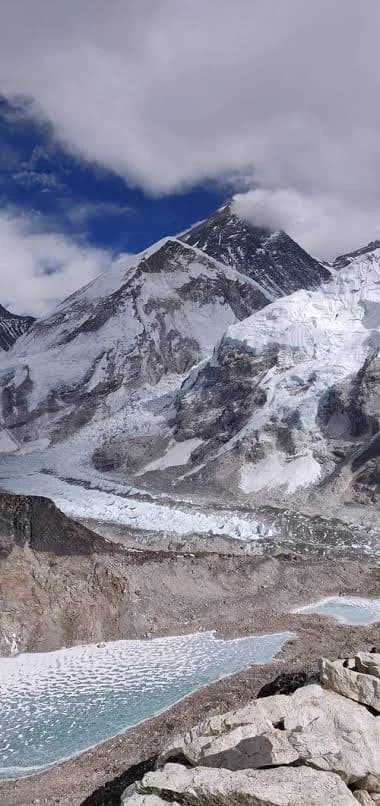
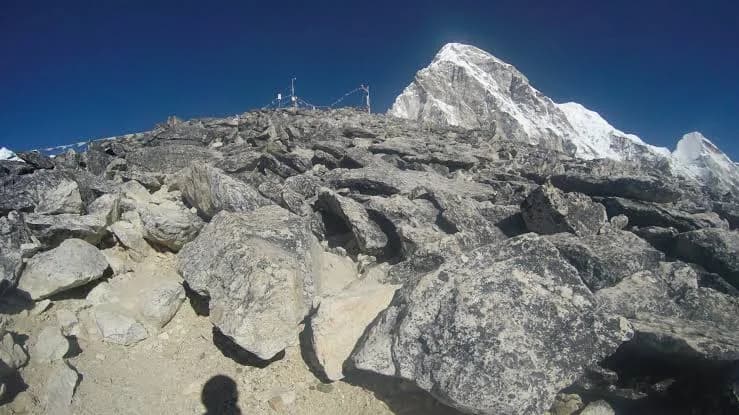
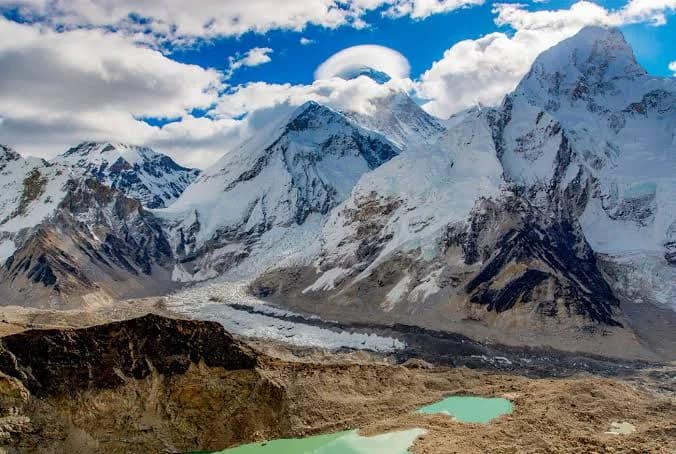
The real highlight comes next. From Pheriche the aircraft climbs out over the valley and up its western flank, passing above Everest Base Camp and out across the Khumbu Glacier, an enormous slow-moving river of ice, before touching down on the rock at Kalapatthar, 5,545 metres. The landing is brief: a few minutes on the ground, but it is the most exposed point of the whole tour: no buildings, no trails, nothing between you and a completely unobstructed view straight up at Mount Everest and its neighbouring giants. The engine keeps running, so the silence up there feels absolute.
Not everyone is in the air at once, and that rhythm is part of what the day feels like. While some are on the ridge, the rest wait in Pheriche, where the thin air and the walls of the valley are already an experience of their own, tea at 4,240 metres, weather moving visibly across the peaks, and the strange knowledge that part of your group is somewhere far above you. Over the following hours each side takes its turn at the top, and by mid-morning the aircraft is turning back down the valley for Kathmandu. Light turbulence over ridgelines and near the high-altitude landing zone is normal, and every leg is flown only when conditions are judged safe.
Who should choose
Know Your Destination
Share your preferred travel date, the number of passengers, exact passenger weights, and baggage details with Mountain Helicopters Nepal. Our operations team will verify helicopter availability, weather conditions, airport status, and total payload to ensure the flight can be operated safely. Once everything is confirmed, you will receive your final itinerary, reporting time, meeting point, and baggage allowance, so you can prepare for a smooth and hassle-free journey.
Before boarding, the crew briefs passengers on seating, restraint belts, communication signals, and in-flight procedures. If the total weight exceeds the allowed limit, some baggage will need to be stored or sent separately in the next helicopter flight but will charge an extra cost in this case. The helicopter flies east across hills, farmland, and river valleys to Lukla, where a brief stop is made for refueling.
From Lukla, the helicopter departs and head over Namche Bazaar and Tengboche Monastery to Pheriche, at around 4,240 meters, continuing journey to Kalapatthar. The helicopter land at 5,545 meters and passengers enjoy views of Everest, Lhotse, Nuptse, and Ama Dablam before returning to Pheriche.
The helicopter retraces its route through Lukla for refueling before returning to Kathmandu
The airport tax is payable at the airport before departure. National park and local permit fees are paid either upon arrival in the Everest region or before takeoff, depending on the flight's operating arrangements and the crew's instructions.
| Countries | Airport tax of Kathmandu | National park fees | Airport tax of Lukla | Total Amount |
|---|---|---|---|---|
| SAARC | 500 | 3500 | 500 | 4500 |
| Other Foreign Countries | 500 | 6000 | 500 | 7000 |
| Nepal | 500 | 100 | 500 | 1100 |
Fares & Cost
Shared by the seat, or the cabin to yourselves. Both fly to the same standard.
Starting fares only, subject to change. Final price confirmed at booking.
Best Season
Months
March-May
Completion
92%
Visibility
Excellent
Months
September-November
Completion
95%
Visibility
Excellent
Months
December-February
Completion
68%
Visibility
Medium
Months
June-August
Completion
34%
Visibility
Low
Health, Safety & Altitude Guidelines
Kalapatthar sits at 5,545 meters, where the air holds roughly half the oxygen available at sea level. Because passengers ascend rapidly by helicopter without the days of gradual acclimatization a trek would allow, some may notice mild light-headedness, breathlessness, or a headache during the brief time on the ground. Symptoms are usually short-lived given the short duration of exposure but should still be taken seriously.
Consult the doctor for any of these if you:
Why Mountain Helicopters Nepal?
Questions
Still have questions? Our team is available 7 days a week.
ASK US DIRECTLY→Every passenger gets a landing experinece. Because of strict weight limits above 5,000 meters, the helicopter can only carry two passengers at a time above Pheriche, so for larger groups the helicopter shuttles back and forth for five passengers; this means three separate rotations until everyone has had their own landing at Kalapatthar.
Each pair typically gets around five minutes at the landing site, enough time for photos and to take in the view of Everest, Lhotse, Nuptse, and Ama Dablam, before the helicopter returns to Pheriche for the next group.
Yes. The short duration at altitude, combined with pilot discretion over weather and weight limits, is specifically designed to manage altitude risk. Passengers with underlying heart or lung conditions should consult a doctor before booking.
If conditions don't allow a safe landing, the flight is rescheduled to the next suitable weather window where possible. If a rebooking isn't workable for you, the refund terms in your written booking confirmation apply.
You'll typically need to provide your travel and backup dates, full legal names, passport details, nationalities, and exact body weight, since weight distribution is critical for the high-altitude shuttle flights. Let us know whether you prefer a group-joining seat or a private charter.
Exact reporting and departure time is confirmed the evening before, based on the latest weather forecast.
Let our experienced team create your unforgettable Himalayan journey.


